A1 Engine Repair Test
Time Remaining: 01:15:00

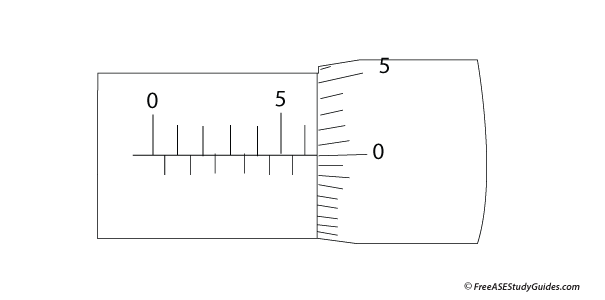
2. When removing and replacing piston rings on a cast aluminum alloy piston, the technician should:
3. During a cylinder power balance test on a COP ignition system, the RPM drop of the #5 cylinder is less than the others. All of the following will cause this test result EXCEPT:
4. A turbocharged engine has poor high-end performance. Technician A says too much exhaust pressure bypassing the turbine wheel results in this condition. Technician B says a stuck closed wastegate results in underboost and poor high-end performance. Who is correct?
5. Which of the following is MOST likely causing an engine to have excessive crankshaft endplay?
6. A compression test indicates the number one cylinder's compression is below specifications. The compression increases after injecting oil into the cylinder. Which of the following is causing this test result?
7. A vehicle has blue-gray colored exhaust emitting from its tailpipe. All of the following results in this condition EXCEPT:
8. A ridge has formed on an engine block just above the piston ring's travel. Which of the following is used to remove this ridge?
9. A vehicle briefly blows blue-gray exhaust smoke from its tailpipe only in the morning or after it's been sitting for a while. Which of the following is causing this condition?
10. An engine's radiator hose collapses as the engine cools. Which of the following is MOST likely causing this condition?
11. After diagnosing and replacing the cooling system's water pump, the vehicle's engine continues to overheat. Which of these is the MOST likely cause?
12. Two technicians are discussing engine sealants and form in place gaskets. Technician A says sealants such as RTV are aerobic. Technician B says some sensors may be damaged if an unapproved sealant is used. Who is correct?
13. An engine has a noise that goes away as the engine warms and reaches operating temperature. Which of these is MOST likely the cause of this condition?
14. An engine suffers from detonation. Technician A this may be caused by a defective EGR valve. Technician B says advanced ignition timing can result in this condition. Who is correct?
15. Technician A says faulty turbocharger bearings will result in a loss of engine oil. Technician B says a dirty turbocharger air filter will result in a loss of engine oil. Who is correct?
16. A squeal is heard in the front of a supercharged V6 engine. This squeal gets louder as the engine is accelerated. Which of the following would cause this condition?
17. A vehicle's engine is sluggish and slow to crank. Technician A says to check the starter and its circuit first. Technician B says to check the voltage, capacity, and condition of the battery. Who is correct?
18. A vehicle’s battery is good and passes all testing, but continues to die overnight. It’s being tested for parasitic battery drain.
Technician A says to set the meter to measure voltage and connect the probes in series between the positive terminal and the battery post.
Technician B says to set the meter to measure amperage and connect the probes in series between the negative battery terminal and the negative battery post. Who is correct?
19. Two technicians are discussing cylinder bore measurements. Technician A says the cylinder's bore should be measured for out of round. Technician B says the cylinder's bore should be measured and checked for taper. Who is correct?
20. Technician A says that connecting rods and caps are matched and can not be mixed. Technician B says it may be necessary to mark these parts for reassembly. Who is correct?
21. Engine crack repair is being discussed. Technician A says metal pinning is an accepted method of cracked cylinder head repair. Technician B says metal pinning is an accepted method of cracked engine block repair. Who is correct?
23. Technician A says valve spring installed height is measured from the outer edge of the valve spring retainer to the pocket in the cylinder head. Technician B says that too thin of a valve margin will not effect its operating temperature. Who is correct?
24. Technician A says that magnetic particle detection is an acceptable method to detect cracks in aluminum castings. Technician B says a special dye is used to detect cracks in aluminum castings. Who is correct?
25. Technician A says that minor scoring on the surface of a flywheel can be removed. Technician B says if the transmission flexplate's ring gear shows excessive wear or cracking it must be replaced. Who is correct?
26. Two technicians are discussing the camshaft in a V8 engine. Technician A says to use an outside micrometer to measure the diameter of a camshaft journal. Technician B says a camshaft spins twice for every one revolution of the crankshaft. Who is correct?
27. A vehicle is emitting black exhaust from its tailpipe under all driving conditions. This is because:
28. The top compression ring groove of piston is worn excessively and the gap is found to be larger than specifications. The technician would MOST likely:
29. During initial inspection the technician notices that there’s a strong sulfur odor emitting from the vehicle’s tailpipe. The customer states that the vehicle has been getting poor fuel mileage. The MOST likely cause of this condition is:
30. A technician performs a battery capacity test on a vehicle that will not start. The test results in a reading of 9.1 volts at 70° F. Technician A says the battery has failed the capacity test. Technician B says battery voltage readings will increase as temperature decreases. Who is correct?
31. A vehicle has heavy white smoke emitting from its tailpipe at all engine speeds. The cause of this problem is:
32. A vacuum gauge is connected to a port on the intake manifold of an engine with poor performance. The needle on the gauge fluctuates between 15 "hg and 20 "hg vacuum at idle. This vacuum gauge reading indicates:
33. Technician A says an engine's main bearing insert has a hole that must align with the matching bores oil supply hole. Technician B says that crankshaft bore alignment can be checked with a feeler gauge and a straightedge. Who is correct?
34. A cylinder power balance test is being performed on a vehicle with sequential fuel injection. Two adjacent cylinders are under performing. Technician A says this could be due to a faulty head gasket. Technician B says this could be due to leaking secondary insulation. Who is correct?
35. Two technicians are discussing hydraulic lifter preload. Technician A says excessive preload will cause high manifold vacuum. Technician B says insufficient preload will cause excessive valve train noise. Who is correct?
36. A vehicle's cooling system is loosing coolant. There is corrosion found around the aluminum water pump. Which of these is MOST likely to cause this condition?
37. A technician installs a radiator pressure tester on the radiator of a cold engine. After starting the engine the pressure quickly rises to 18 psi. Technician A says this is a normal condition. Technician B says the engine has a leaking cylinder head gasket. Who is correct?
38. Two Technicians are discussing a PCV system. Technician A says a stuck closed PCV valve could cause external oil leaks. Technician B says that the PCV system removes blowby gases from the engine case. Who is correct?
39. An OHC engine has recently had the cylinder head replaced. The engine runs rough and stumbles. Technician A says this may be caused by incorrect valve lash adjustment. Technician B says that only in-block camshafts require valve lash adjustments. Who is correct?
40. Technician A says worn valve springs result in valve float at wide open throttle. Technician B says valve springs should be inspected for squareness with a square and a feeler gauge. Who is correct?
41. Technician A says the valves in many interference engines open further into the combustion chamber that than those of a non-interference engine. Technician B says a broken timing belt in an interference engine can result in damage to the engine's valve train. Who is correct?
42. The spark plug is removed and shop air is introduced to the #1 cylinder while at TDC. Bubbles are seen in the radiator neck. The MOST likely cause of this condition is:
43. A vehicle is emitting black smoke from its tailpipe, has poor fuel mileage and the torque converter is not engaging. Technician A says the ECT sensor's signal will effect TCC application. Technician B says the ECT sensor will affect the engine's fuel mixture. Who is correct?
44. Technician A says a flex fan will increase its pitch at higher engine speeds. Technician B says a viscous fan clutch contains a silicon based fluid and should be checked for leaks. Who is correct?
46. After performing a cylinder pressure test on a four cylinder engine, the #1 cylinder is 30 psi below specifications. All the other cylinders have passed. The pressure in the #1 cylinder increased after injecting engine oil. Technician A says excessive carbon buildup on the piston head has caused these test results. Technician B says these results indicate a faulty intake or exhaust valve. Who is correct?
47. One valve tip on a cylinder head is much higher than the others. The MOST likely cause of this is:
48. Two technicians are discussing a ballooned oil filter. WhIch of these is causing this condition?
50. An engine has excessive crankshaft endplay. Which of the following is MOST likely causing this condition?
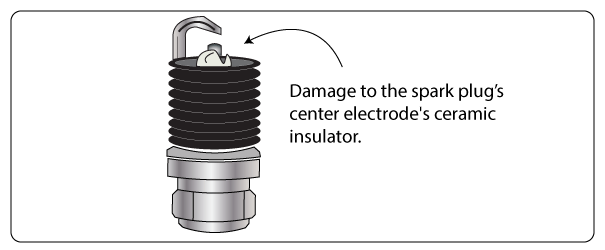
52. Two technicians are discussing an engine that suffers from repeated spark plug failure. Technician A says a hot spark plug with too high of a heat range may result in detonation. Technician B says a cold spark plug with too low of a heat range may foul prematurely. Who is correct?
53. A light truck with a DOHC V6 engine and a manual transmission is making a rattling noise at idle, near the bottom rear end of the engine. This noise increases with engine speed. Technician A says this noise is likely caused by hydraulic lifter leak down. Technician B says the flywheel bolts may be loose. Who is correct?
54. An oil pressure switch is being tested for operation. Technician A says to use a digital multimeter. Technician B says this switch can be tested on the vehicle. Who is correct?
55. Two technicians are discussing an engine with a collapsed radiator hose. Technician A says this is caused by insufficient coolant level. Technician B says this is caused by a faulty radiator cap. Who is correct?
56. A vehicle is overheating, but returns to normal at idle. Both of the engine’s electric cooling fans are functioning correctly. Technician A says this could be caused by an internal restriction in the radiator. Technician B says an infrared thermometer is used to diagnose this problem. Who is correct?
57. A metallic knocking sound is heard behind an engine's harmonic balancer. An oil pressure test indicates oil pressure is below specifications. Technician A says the engine's main bearing inserts should be inspected for wear. Technician B says a worn thin crankshaft thrust bearing will cause this condition. Who is correct?
58. A vehicle vibrates only when placed in reverse. The MOST likely cause of this condition is:
59. Two technicians are discussing a turbocharged engine. Technician A says the wastegate is a component used to control boost pressure. Technician B says when opened, the wastegate diverts exhaust gas from the turbine wheel. Who is correct?
60. Technician A says that torque to yield bolts can always be reused. Technician B says that torque to yield bolts can be reused as long as they are cleaned and oiled before they are reinstalled and torqued. Who is correct?
Please select an answer