Automatic Transmission Valves
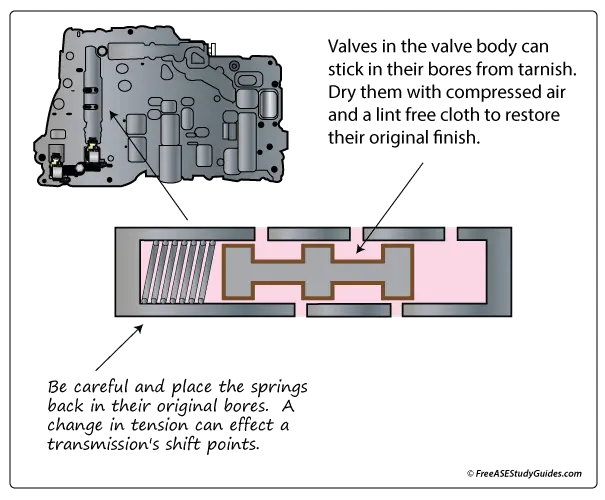
At the heart of the automatic transmission's hydraulic control system is the valve body. It consists of several parts: the separator or transfer plate, valves, and valve body. A gasket and a separator plate separate the upper and lower halves. It's installed onto the transmission as a single unit and can be constructed of iron or, on most transmissions, aluminum.

The valve body contains different valves for different purposes: the poppet, the check ball, and the spool valve
The poppet valve can be a ball or a flat disc. It typically has a stem that acts as a guide for the valve's opening or closing. This valve acts as a port, blocking or allowing fluid flow.
A check ball valve sits in a seat in the valve body. It allows or blocks fluid flow according to the direction of flow. Depending on the application and manufacturer, they are either normally open or closed.
The spool valve is the most common valve found in automatic transmissions. They resemble a spool of thread with large areas used to block fluid flow called lands and stemmed areas called valleys. At each end of the valve is a reaction area. It's where fluid pressure, linkage, or a spring act as a force to activate the valve.