Turbocharger Wastegates
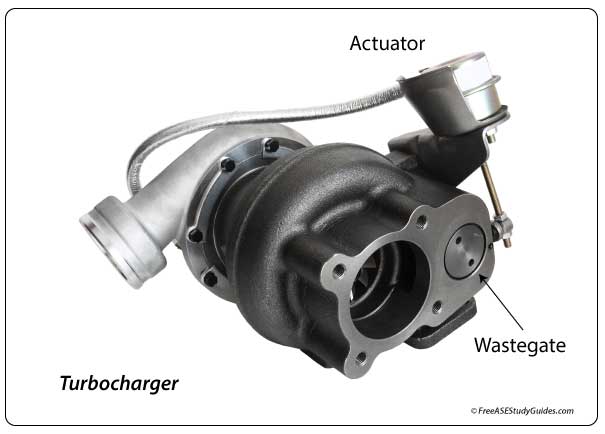
A turbocharger's boost is controlled by a solenoid or diaphragm that opens and closes the wastegate. It opens to divert some of the exhaust away from the turbine wheel, depriving it of its energy source. Without this necessary reduction in output, excessive manifold and cylinder pressures would damage vital engine components. When manifold pressures reach their maximum, the wastegate opens, depriving the turbine wheel of exhaust and allowing the compressor wheel to slow. This action reduces boost pressure. The wastegate will close once the boost pressure is under control and reaches normal operating pressure.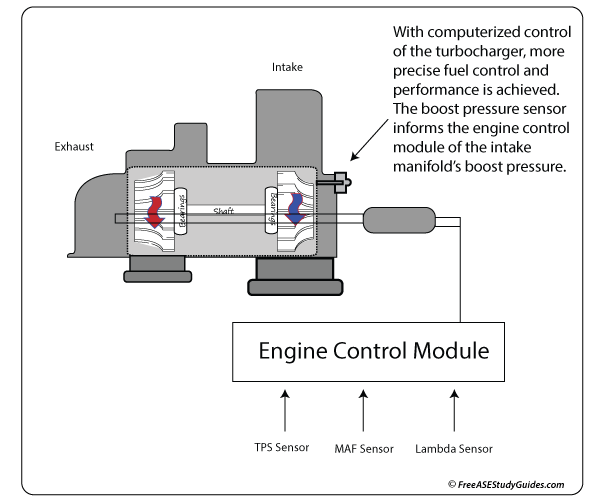
A turbocharger is an exhaust-driven pump and compressor that increases air intake volume. It improves the volumetric efficiency of an engine. Because a turbocharger is driven by expanding exhaust gases, it is said to be a free boost source.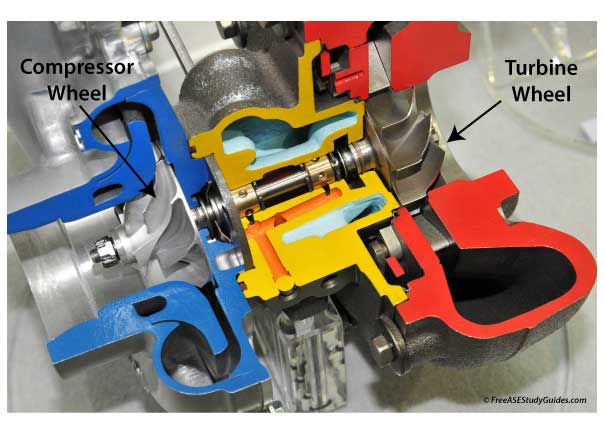
Expanding exhaust gases drive the turbine wheel. It is part of a shaft that drives the compressor wheel. The compressor wheel compresses the air-fuel charge in the intake manifold. This compressed charge is denser in comparison to a normally aspirated engine. Aspirated engines rely on the downward stroke of the pistons to create low pressure or vacuum in the intake manifold. The increased intake manifold pressure forces a turbocharged engine's denser charge into the cylinders.
Turbocharged engines are different from normally aspirated engines. They have a lower compression ratio and are port injected. These parts are usually not interchangeable. Premature failure is typically due to a lack of maintenance.
Turbocharger Bearings
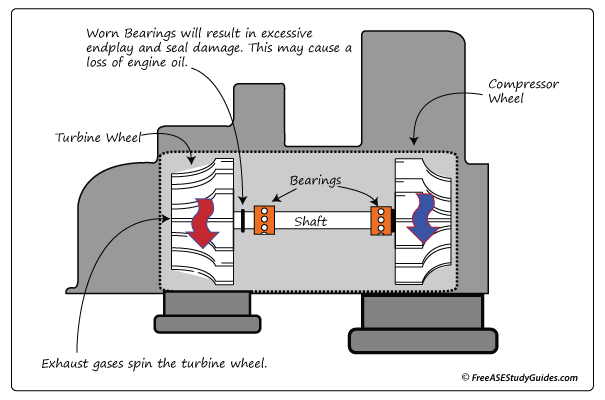
Most turbocharger failures are oil-related. Turbocharger bearings spin at very high speeds; they quickly overheat if not lubricated sufficiently.
Blue-Gray Exhaust
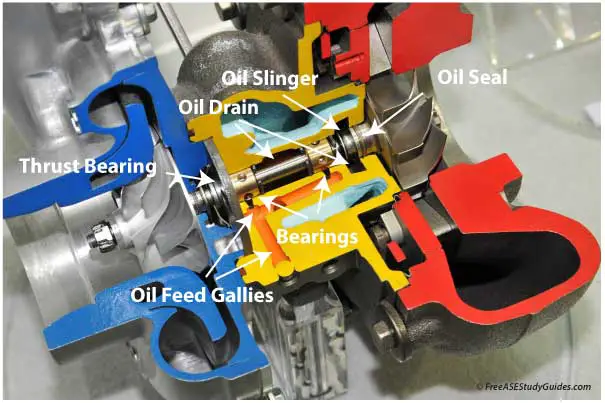
One of the symptoms of a faulty turbocharger is blue-gray exhaust. Excessive crankcase pressure, shaft end-play, a clogged or restricted oil drain, and oil seal failure result in oil entering the turbine housing—the burning oil results in the blue-gray exhaust. In addition, if the oil is restricted and is not draining back to the oil pan properly or there is excessive crankcase pressure, oil can back up into the turbocharger and leak past the oil seals.
Turbochargers are usually cooled by the engine's cooling system. The engine's cooling system and the lines to the charger must be maintained and functioning properly. Check the air tube and make sure it is not obstructed or collapsed. Also, keep the air filter clean and ensure no foreign debris or dirt enters the intake.