Torque Converter Removal
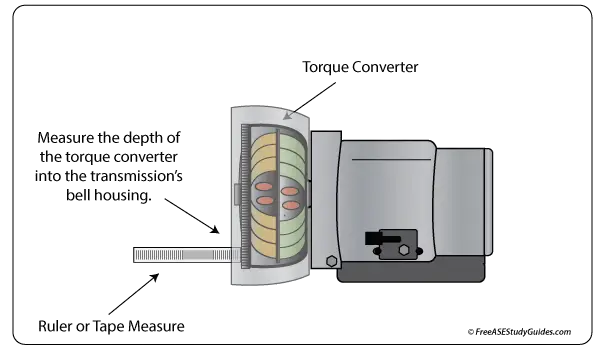
After separating the engine from the transmission:
- Measure the torque converter's depth into the transmission's bell housing.
- Use this measurement to ensure the torque converter is correctly aligned with the transmission oil pump when reinstalling. Use a straight edge and a tape measure or a ruler.
- Improperly installing the torque converter's hub into the front of the transmission will damage the oil pump.
Torque Converter Inspection
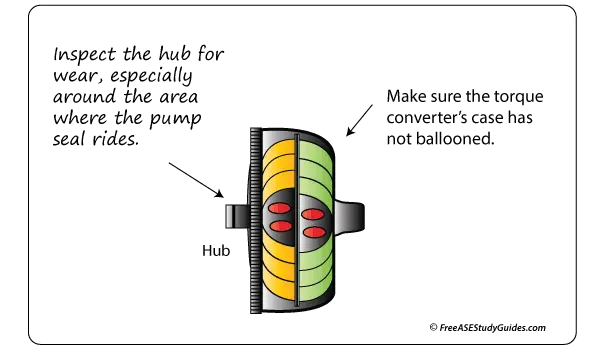
Perform a complete inspection of the torque converter after removal. Check the drive hub for burrs and scratches. Most of these are easily removed by polishing the hub with crocus cloth. Transmission fluid leaking into the bellhousing is usually caused by a leaking pump seal. A torque converter hub with deep scratches or a significant groove, usually where the transmission pump seal was riding, damages and wears the seal, resulting in the leak.
Seized Stator
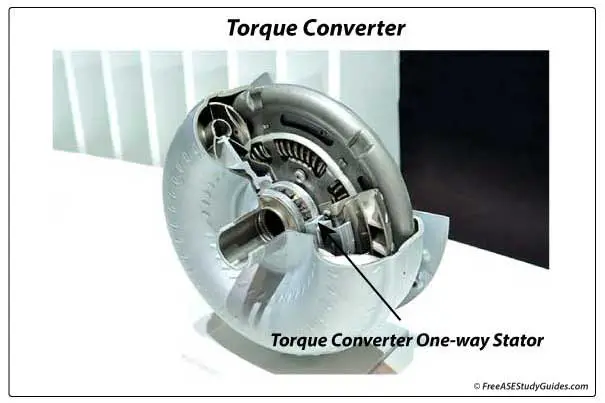
Insert a few fingers into the stator spines and turn. A good stator clutch locks in one direction and spins freely in the other. Replace the torque converter if it has a bad one-way stator clutch. Check the studs and threaded mounts for stripping and wear and the seams for leakage. Torque converters can balloon from too much pressure, resulting in a whining sound heard at the front of the transmission. Replace the converter if it is swollen or leaking.
