Tire Ratings and Sizes

Different-sized tires on the rear of a vehicle affect the ABS braking system, resulting in the amber ABS warning light. The tire rating and sizing system has easy-to-understand sections that describe size, load, and speed ratings.
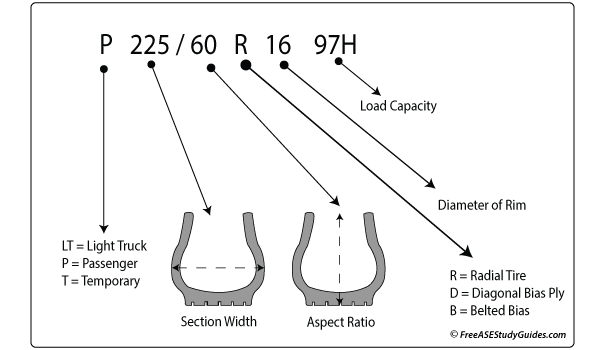
This tire size (P225/60R16 97Z) will help describe the meaning of these different sections. The (P) stands for the P-metric size. P-metric means it's fitted for passenger vehicles like cars, light trucks, SUVs, and minivans. A P-metric tire has a 1/4 ton or a 1/2 ton load capacity. The (LT) prefix stands for the light truck metric, and LT tires typically have a 3/4-ton to 1-ton capacity.

The next three digits (225) following the P-metric indicate the tire's section width. The section width of a tire is the measurement of the mounted tire's widest part between the inner and outer sidewall. This number is in metric millimeters and converted to inches by dividing the number by 25.4.

Following the section width is a two-digit number that indicates the tire's profile or sidewall aspect ratio. The aspect ratio is the tire's sidewall's sector height divided by its width. A tire with a low aspect ratio has a short sidewall.
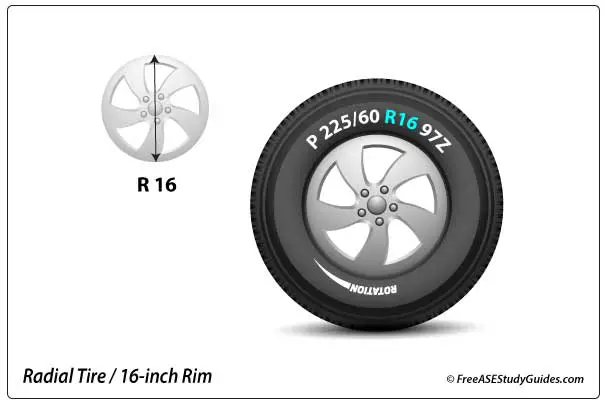
The next section will typically be an R because most tires sold today are radial. A (D) indicates the tire is a diagonal bias-ply. These tires are less common than they used to be. Then, the size of the tire or rim the tire will fit. This number is usually in inches (15-16) but can be in millimeters (390) on bigger tires.
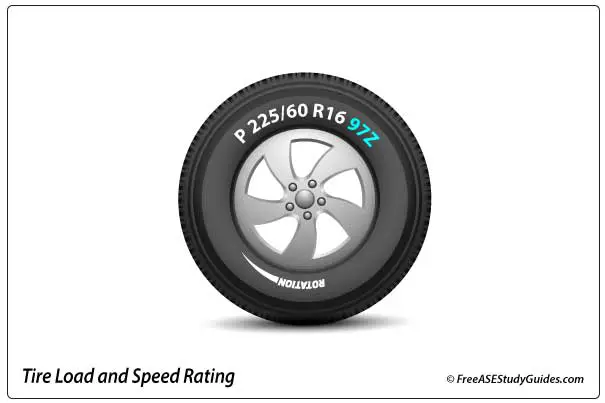
The last three digits indicate the tire's service description. The first two digits are the tire's load rating, which indicates the tire's load-carrying capacity. Having no letter means the tire was designed for European vehicles and may have slightly different load capacities. If the series ends with a C, the tire is for heavier load capacities. The final digit (Z) is the tire's speed rating. Z-rated tires are high-performance tires typically found on sports cars.