Troubleshooting the PCV System
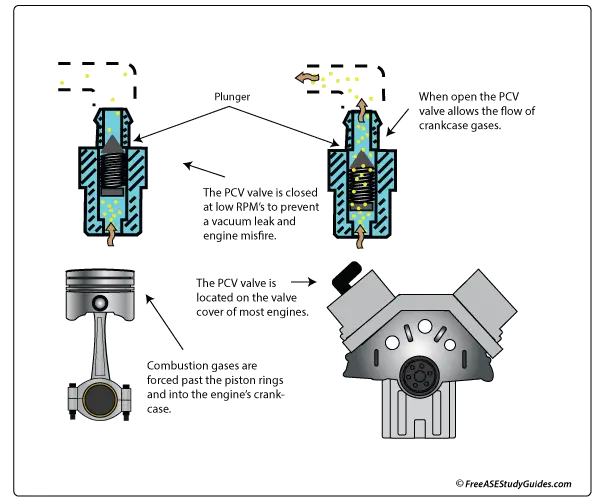
The Positive Crankcase Ventilation System removes blowby gases from the crankcase. It routes them to the intake manifold for combustion. The PCV valve controls the flow from the crankcase to the intake manifold.

A PCV valve uses light spring pressure to hold the valve in the open position while the engine isn't running or when a manifold vacuum drops, like during acceleration. This open valve results in maximum crankcase ventilation.

When the engine is idling or cruising, the intake manifold vacuum is high and pulls the valve upward, blocking the port to the intake manifold. As a result, the flow to the intake manifold is interrupted.
PCV Valve Diagnosis
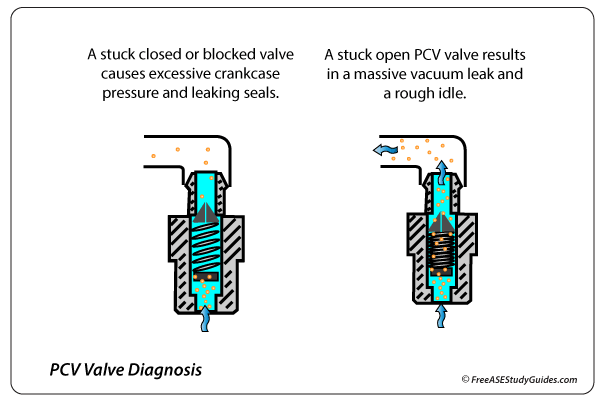
A stuck closed PCV valve results in excessive crankcase pressure and oil forced past seals and gaskets. They get clogged, and blowby gases build in the crankcase. Some air supply hoses have an air filter or filament to clean the air entering the crankcase. Oil travels up the clean air hose and into the air filter, resulting in a contaminated air filter or breather.

A stuck open PCV valve or leaking PCV hose results in a lean air-fuel ratio and drivability issues like surging. An engine vacuum should be felt at its opening with the valve removed from the valve cover. The plunger should "snap back" into the valve, and a strong vacuum should be felt when your thumb is placed over the hissing vacuum leak. When removed from the engine, the PCV valve should rattle when shaken. Please note that if the valve does not rattle, it's clogged and must be replaced.