Low Brake Pedal
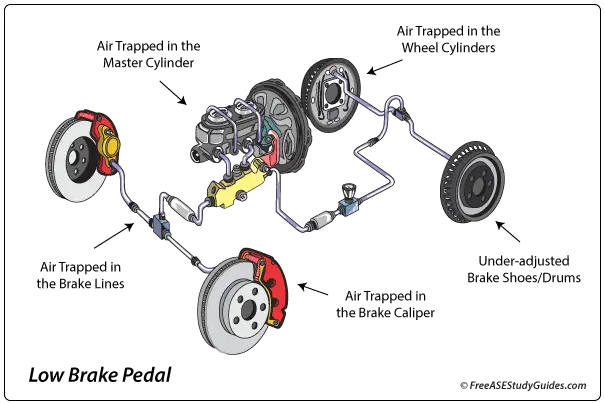
The two most common causes of a low brake pedal are air in the system and misadjustment. A low and spongy brake pedal results from air entering the system. Air is compressible, resulting in a spongy feel at the end of the pedal stroke. An under-adjusted brake drum-to-shoe clearance results in a low but normal to hard pedal.
Air in the Brake Fluid

Most current vehicles have four-wheel disc brakes. Contaminated, overheated, or aerated brake fluid is the most common cause of a low brake pedal. A low master cylinder reservoir level can be normal brake pad wear or an external fluid leak. A small leak in the system will appear as a wet spot on a line, a fitting, or a brake caliper/wheel cylinder. Air pockets form in high places and loops in the brake lines. Bleed the brake system to remove contaminated fluid and air.

The DOT Department of Transportation rates brake fluid with a DOT rating: DOT3, DOT4, and DOT5. The higher the DOT rating, the higher the boiling point. Moisture in brake fluid lowers its boiling point.
Heat and time degrade brake fluid. The heat from the braking system can cause the fluid to boil and vaporize, leaving pockets of vapor in the brake lines. This vapor is compressible and results in a low spongy pedal. As a result, brake fluid can degrade and change viscosity, affecting brake pedal response time. Perform a brake flush to repair this condition.
DOT5 brake fluid is silicon-based, and DOT3, DOT4, and DOT5.1 are glycol-based. Never mix the two; it results in a spongy pedal and a loss of braking performance.
Drum Brake Adjustment
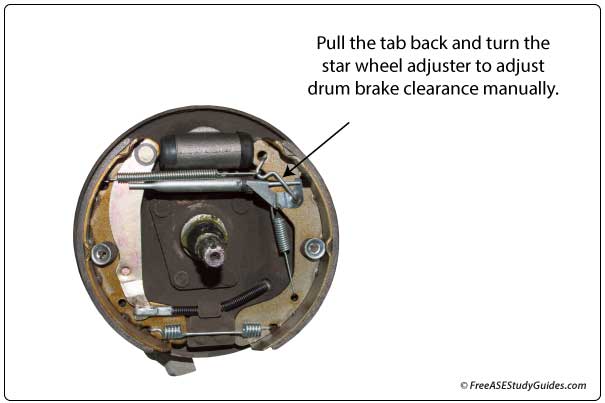
Drum brakes are supposed to be self-adjusting. However, brake shoe lining to drum clearance has always been a problem; the adjustment assemblies seize and only sometimes function as intended. However, they are easily repaired, greased, and adjusted. To adjust the brake shoes on most vehicles, reduce the gap to a slight drag and then back off the star adjuster a turn or two. Check with the manufacturer for TSBs or any special procedures before proceeding.
Sinking Brake Pedal

Master cylinders have internal cup seals that wear and allow fluid to bypass the seal, resulting in a brake pedal that sinks to the floor while the vehicle is stationary. To test the internal seals, remove the two brake lines, cap the ports, and apply the brake pedal. If the internal seals bypass, the pedal will sink to the floor. If the pedal is firm, there is a leak or air somewhere else in the system.