Interference Engines
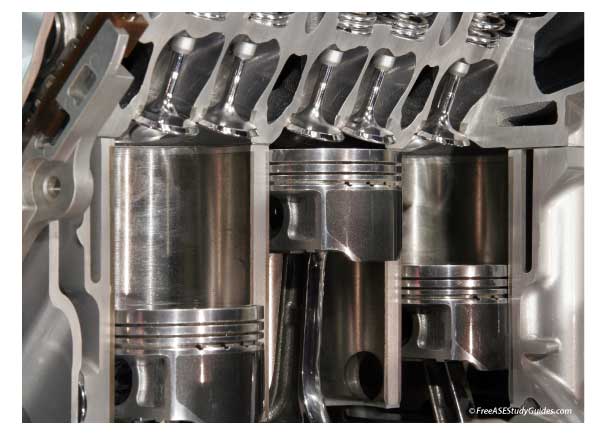
Interference engines offer more performance than freewheeling engines, because of their high compression small-displacement design. But if the timing belt or chain breaks, the valves and the pistons collide, causing severe engine damage. This is not true with freewheeling non-interference engines. They have enough clearance between the valves and the top of the piston to prevent this catastrophic event.
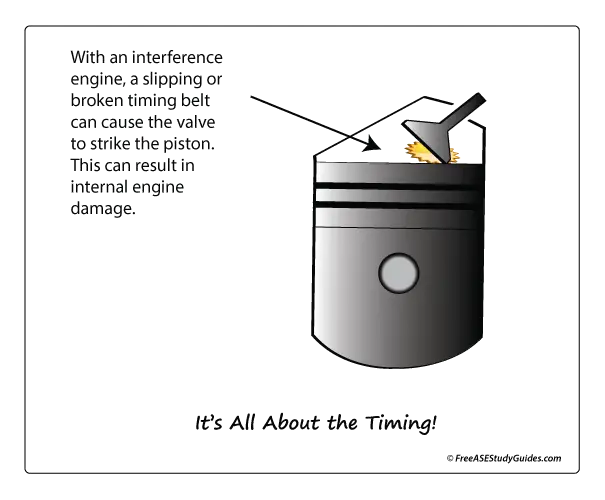
Manufacturers build interference engines primarily because they provide higher compression than their freewheeling counterparts. High compression engines provide increased engine performance. These days instead of belts, manufacturers install timing chains on most of their engines that can easily last the life of the vehicle.
There are still lots of great interference engines that use timing belts. If the timing belt breaks on one of these engines while it's running, the inertia is great, and the valves strike the pistons causing damage. It's important to replace the timing belts on either of these engines according to the manufacturer's recommended intervals. It's even more important to replace the timing belts on an interference engine due to this difference in design.