Charging System Voltage
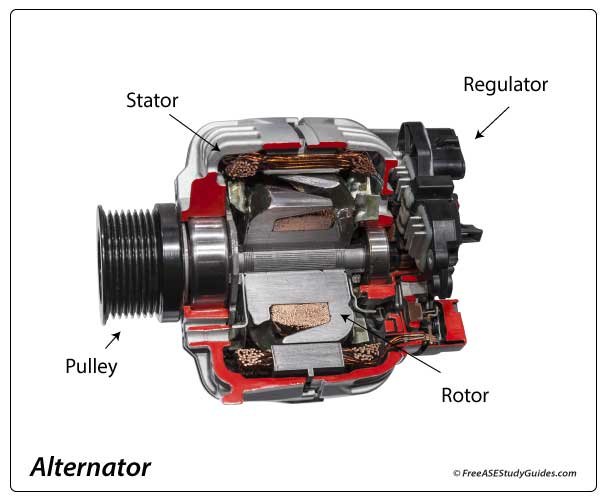
A stuck closed voltage regulator typically causes high charging system voltage. Voltage regulators adjust output voltage according to the demands of the electrical system. In late-model vehicles, this is accomplished through a sensing circuit that informs the PCM of battery temperature and electrical system demands.
Voltage output is achieved by changing the amount of current to the field circuit. The current is input into the alternator on the field circuit or exciter wire. The more current into the alternator’s field circuit, the more voltage output the alternator produces. The increase in current increases the magnetic field created inside the alternator, increasing voltage output to the battery terminal.

The older electromechanical voltage regulators were more prone to this problem than the newer electronic and solid-state regulators. These regulators were placed inside the alternator or mounted in the engine compartment. Sometimes, the contacts inside the regulator become stuck closed, producing a constant and unrestrained voltage output.
Alternators can produce over 250 volts of power and, left unchecked, overcharge the battery or, worse, damage electrical system components. As engine speed increases, so does the alternator’s output, possibly making the vehicle’s headlights brighter during acceleration.