Radiator Cooling Fans
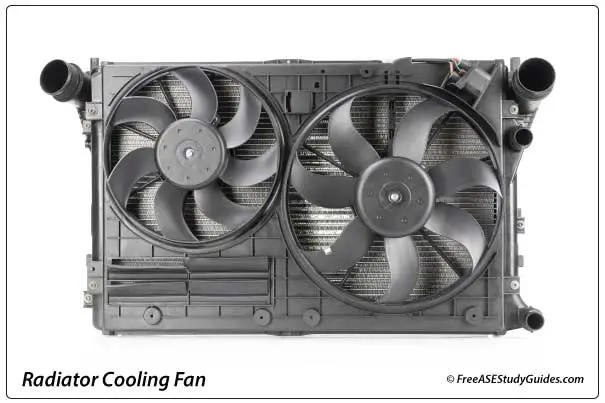
Cooling fans are driven by the engine's crankshaft or electric motor. They provide airflow through the radiator fins, transferring heat from the engine's coolant to the outside air. The radiator only operates effectively with proper airflow. This airflow is vital, especially while idling or traveling slowly. Today's aerodynamic designs have reduced the size of the radiator grille, demanding even more airflow from electric radiator cooling fans.
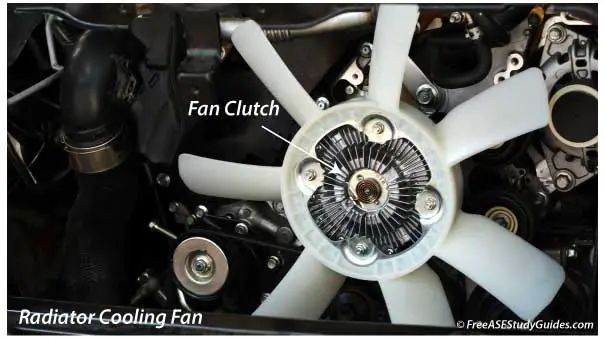
Many longitudinal engines have fans attached to the water pump flange. These fans often have a fan clutch to control airflow. Bent or missing blades cause an imbalance and a vibration. This problem can result in damage to the water pump bearings and seals.

Viscous Fans: The engine's crankshaft drives the viscous fan clutch. The typical viscous fan clutch contains silicon oil that may leak from the unit. They measure the viscosity in CSTs or centistokes. Check the unit for leaks around the seams and shaft. They also have a thermostatic spring that should be inspected. Check the spring by releasing it from its seat and measuring the distance between it and its retainer. Always check for manufacturer's specifications and special procedures. A seized fan clutch makes a whirring noise because the clutch is locked, spinning the fan blades at engine speed at all times.
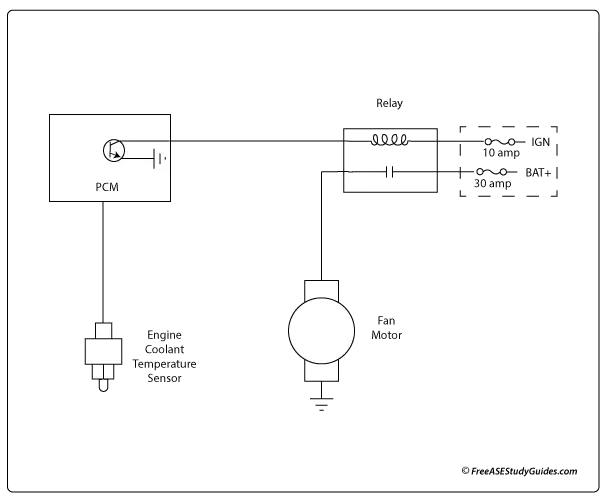
Electric Fans: Electric fan blades are typically plastic. They wear and begin to crack. The PCM controls fan operation; it uses the signal from the ECT or engine coolant temperature sensor. This sensor senses the temperature of the engine's coolant and sends a variable voltage signal to the PCM. The PCM operates the fan motor through the engine's cooling fan relay.