Cylinder Balance Testing
Using a cylinder balance test a technician can pinpoint which cylinder in an engine is not contributing equally with the others. Each cylinder in an engine must contribute an equal amount of power. If one or more of these cylinders do not an imbalance occurs and the engine will stumble.
A cylinder power balance test is performed to locate the cylinder causing a lack of power and not contributing to the engines balance and performance. It is sometimes used along with a cylinder compression and cylinder leakage test to pinpoint the problem.

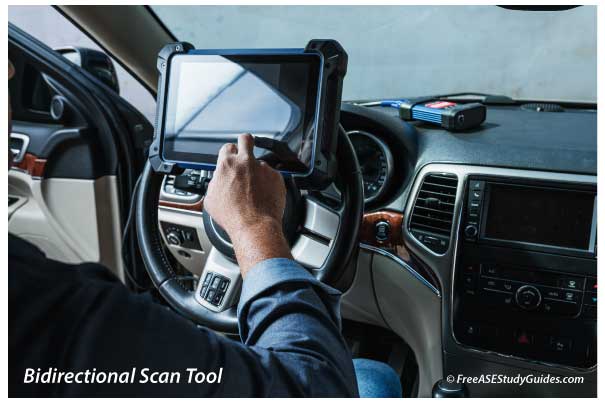
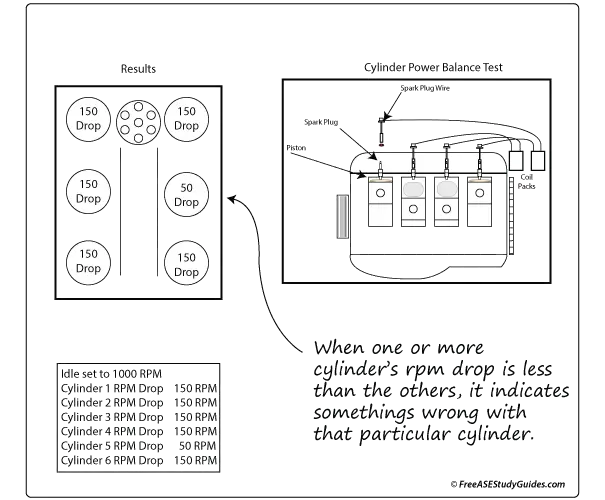
A cylinder power balance test gives an indication of each cylinders power, testing its power and effectiveness compared to the others. Each cylinder is tested at a particular speed (800-1000 RPM) and the RPM drop is recorded. The test is best performed with an engine analyzer. If an analyzer is unavailable, the technician can momentarily (a few seconds) disconnect the plug wire from its corresponding spark plug or distributor connection to disable the desired cylinder. On a distributorless system the culprit will be a coil, wire, or module. If two cylinders are dead and share a common coil, it is likely the coil is at fault. These are known as waste spark ignition systems. They use group firing.
Newer cars may compensate. A prolonged open in the secondary ignition system may cause damage to the coil or ignition module. Sometimes you will need to disconnect a sensor like an O2 sensor so the computer will not try to compensate for the sudden drop in RPM. If in doubt go ahead and check the manufacturers specifications before removing the spark plug boot and remember safety first. Use a grabber or a tool that will protect your hand from shock.
Notice the RPM drop as the plug wire is removed from the plug. If a cylinders RPM drop is not consistent with the others, this indicates a problem with that cylinder. An engine analyzer tests each cylinder and then compares the results. An engine analyzer or dedicated tool is best used for testing COP ignition systems. This is because coil damage may result from removing a coil pack while the engine is running. Check with the manual, there are many ways to cancel a cylinder such as removing an associated connector.
Look for anything that would effect a cylinders power. A leak in the intake at that cylinder or a clogged fuel injector. The ignition system is often at fault. Look for crossed wires or a weak coil on a coil on plug ignition system. This is common these days and has taken over the distributor as an "easy to identify" source of so many ignition problems throughout the years. The engine intake and exhaust valves, piston and piston rings, or the head gasket may be at fault as well. Anything associated to that particular cylinder or cylinders. A faulty head gasket or crossed ignition wires will cause two adjacent cylinders to fail the balance test.