(COP) Coil On Plug Ignition Systems

Many ignition systems were used throughout the years, and things continue evolving. For example, a coil on plug "COP" ignition eliminates the distributor and secondary wires. It replaces them with the ECM, ignition module, and a coil mounted directly over the plug of each cylinder. This electronically controlled ignition system is very efficient.

To properly diagnose a misfire on one or all of the engine's cylinders, it's essential to understand the system. These are some of the components that make up a typical coil-on-plug ignition system.

COP coils: The coil above integrates the ignition module into the coil. The coil contains the primary and the secondary circuits. It's where the two meet. Notice the trigger pin; it's a member of the control circuit. With some COP systems, the trigger circuit also contains a feedback circuit used by the ECM to confirm that the coil fired. In this type of system, the ECM includes the ignition module.

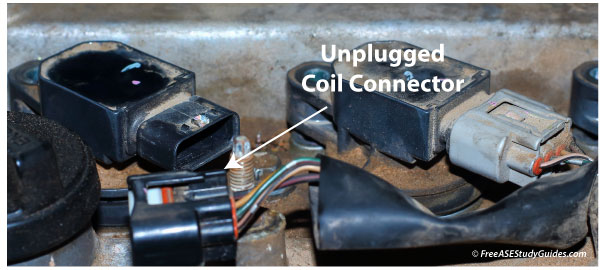
Related wiring: Ensure the connectors, wires, and harness are in proper operating condition with a visual inspection. Sometimes, the connectors have locks that dry out and don't snap back into place correctly after removal. Perform a wiggle test and check these connectors by lightly pulling the plug to ensure it is correctly seated into its companion socket. Connectors contain a mechanical snap and a rubber seal to prevent environmental exposure. Check any suspected wiring for resistance with an ohmmeter and compare it with the manufacturer's specifications. Loose connectors cause intermittent failures.
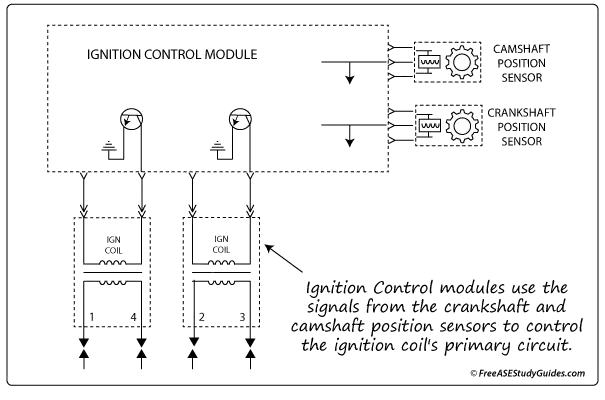
Ignition Control Module: The ignition control module takes the distributor's place in a distributor-less (EI) ignition system. It receives timing instructions from the ECM primarily based on input from the crankshaft and camshaft sensors. It sends the signal to the appropriate cylinder. The IM may be a stand-alone, located in the ECM, or integral to each ignition coil.
Engine Control Module: The ECM may or may not contain the ignition control module. It receives input from sensors like the crankshaft and camshaft position sensors. It calculates ignition timing by comparing the inputs to preset tables. It then sends this signal to each coil in the correct firing order. A problem between the ECM and a cylinder's coil or a faulty ECM driver results in no power and a misfire at that cylinder.