Brake Fluid DOT Types

Automotive brake fluid is formulated to meet standards developed by the Department of Transportation (DOT) and the Society of Automotive Engineers (SAE). The Department of Transportation assigns a number indicating the fluids rating DOT3, DOT4, DOT5. The higher the number, the higher the boiling point.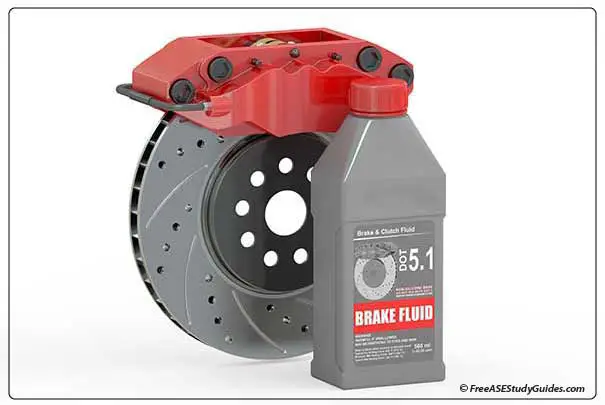
The higher the DOT number, the higher the boiling point. This is important because friction-generated heat is transferred from the braking system to the brake fluid. This heat can cause the brake fluid to boil, producing vapor. A hydraulic braking system works because fluids are not compressible. This vapor is compressible and will result in reduced braking performance or worse. This conversion from a liquid to a gas will cause a spongy brake pedal. A brake system flush with the proper brake fluid is necessary to remedy this condition.
Most of today's vehicles use DOT3 glycol (Polyalkylene Glycol Ether) brake fluid. DOT 2 is oil-based and not used in the automotive industry. Silicon-based fluids (DOT5) are usually found in special applications like show cars because they don't damage painted surfaces like their glycol counterparts. Please note that DOT 5.1 is a different chemistry; it's a non-silicon-based alternative that should not be mixed with DOT 5 brake fluid.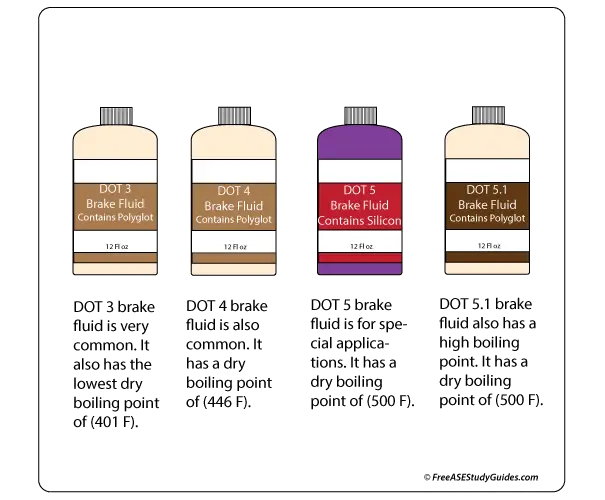
Always use the recommended brake fluid, usually indicated on the reservoir's vent cover. All brake fluids must meet DOT standards for corrosion protection, lubrication, and boiling point.