Clogged Catalytic Converter
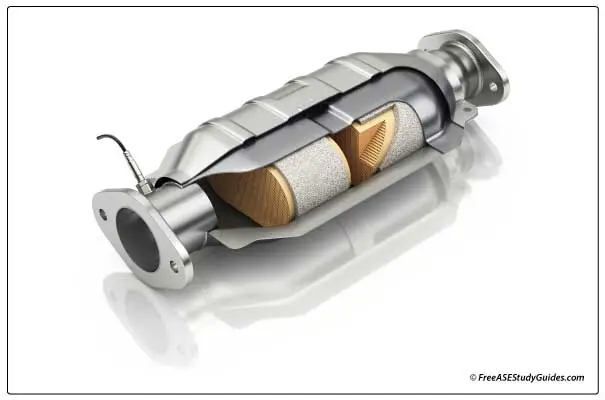
A catalytic converter substrate consists of an aluminum oxide honeycomb coated with materials like platinum and palladium. They react and remove (CO) carbon monoxide and (HC) hydrocarbon from the exhaust stream.
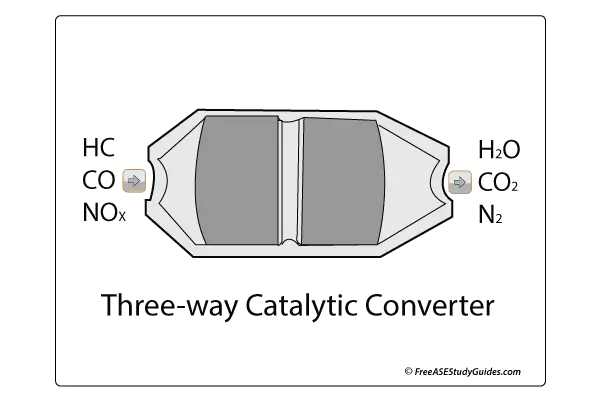
A two-way catalytic converter works by oxidizing CO and HC to (CO2) carbon dioxide and water. A three-way catalytic converter also removes (NOx) oxides of nitrogen from the exhaust.

When a vehicle runs rich, the catalytic converter works harder and runs hotter than intended. This heat can damage the substrate and cause it to melt and degrade. The melted substrate results in excessive back pressure. If a catalytic converter rattles when tapped with a plastic hammer, the substrate is damaged, and it needs replacement.
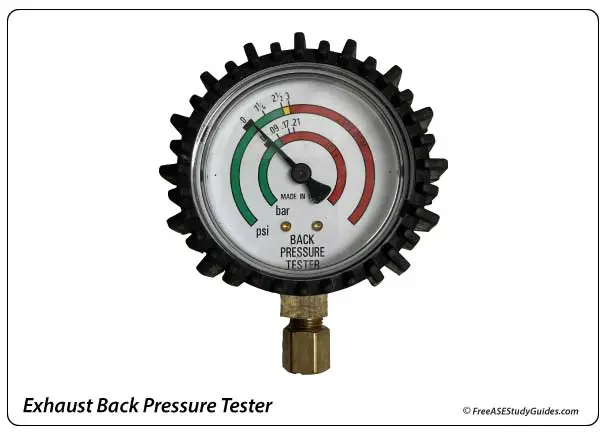
A clogged catalytic converter causes a restriction that results in a noticeable drop in power during acceleration. Perform a back pressure test to confirm a clogged catalytic converter. Back pressure testers are used to test for restrictions in the exhaust flow. Remove the upstream oxygen sensor and install the tester. Engine specifications typically require the backpressure to be below ~1.0 psi. At idle, and no more than 4.0 or 5.0 psi. at snap-throttle. There is a big difference between a late model and an older model vehicle. Check with the vehicle manufacturer's specifications before testing.
