The Camber Angle
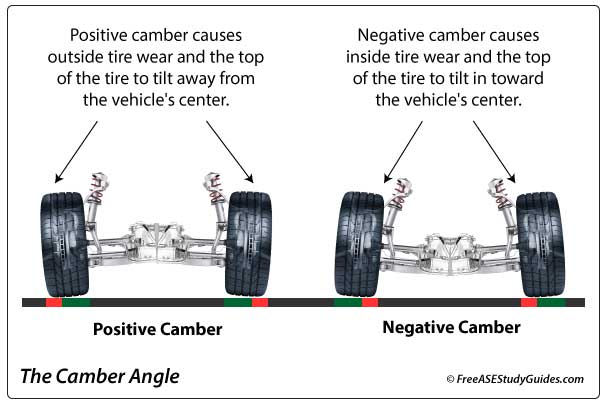
The camber angle is the inward or outward tilt of the top of the tire as viewed from the front of the vehicle. The more the top of the tire leans inward toward the vehicle's center, the more negative the camber. The more the top of the tire leans away from the vehicle, the more positive the camber.
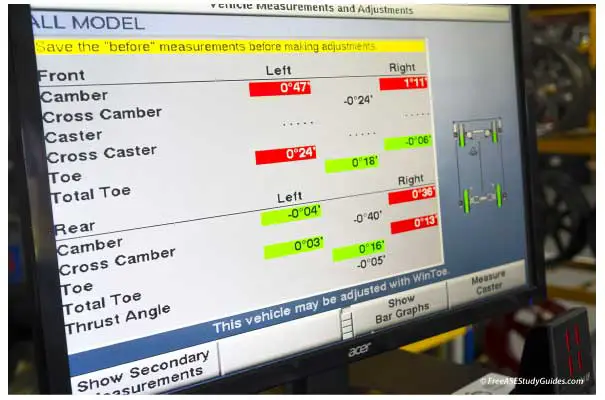
An out-of-specification camber angle causes one-sided tire wear. There are many ways to adjust the camber depending on the vehicle's make and model. Check and adjust the caster and camber before adjusting the toe.

Eccentric cam: Eccentric cams adjust the camber on short arm long arm and some MacPherson strut suspension systems. On MacPherson strut systems, a slotted hole is located on the strut arms bolt hole, adjusting and attaching it to the steering knuckle. Usually, the cam is slotted onto an eccentric bolt. Turning the bolt causes the strut arm to move inward and outward for camber adjustments.
Shims: Add and remove shims to the upper or lower control arm mounting bolts to adjust the camber on short-arm long-arm suspension systems. After adjusting the camber and the caster, set the toe angle. Some vehicles use a slotted upper strut mount. An aftermarket slotted strut tower is often available for vehicles with non-adjustable camber.
