Brake Drag

Brake drag is caused by the brake pads or shoes not releasing completely when the brake pedal is released. If it involves only one of the front brake units, the vehicle will pull to the side with the dragging unit. Dragging brakes must be repaired because it results in overheated parts and possible damage to the brake system. There are different causes for brake drag.
Master Cylinder: An incorrect brake pedal adjustment can cause brake drag. This pedal adjustment is crucial, and if adjusted too tightly, the vent port of the master cylinder can become blocked. The building pressure in the system results in brake drag and possible brake lockup. A slight gap should be present between the pushrod and the master cylinder. A worn or corroded master cylinder bore causes excess pedal effort, resulting in dragging brakes.
Brake Lines
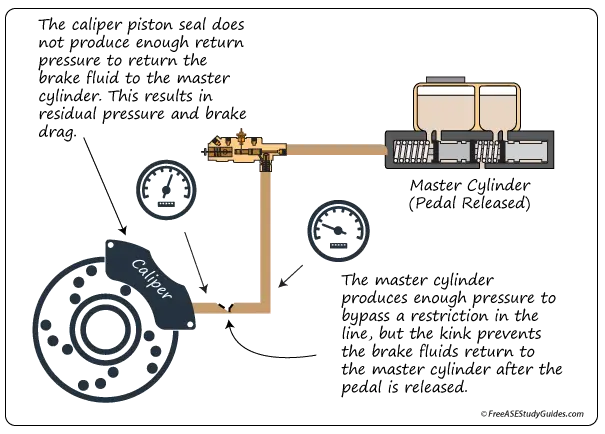
Brake Lines and Hoses: There may be pressure trapped in the brake line or hose after the pedal has been released. During brake application, pressure is high enough to bypass the kink. When the brake pedal is released, the spring pressure of the master cylinder is not sufficient for the pressure to bypass the kink. This pressure difference happens when the line is pinched or kinked and leaves the brake unit applied and dragging.
Brake Hose

Brake hoses twist while replacing the caliper after a brake job, resulting in brake drag at that unit. Fluid pressure can bypass the twist during the application but not return to the master cylinder after release.
Brake Hardware

Return Springs: Weak or broken return springs will result in brake drag. This drag happens with drum brake systems as the springs wear or become rusty.