Brake Master Cylinder Ports
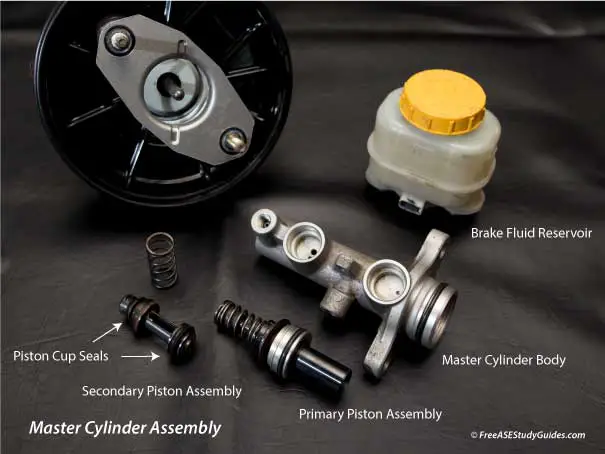
The master cylinder consists of two pistons that work in tandem to apply pressure to the braking system. These pistons have cup seals that seal fluid in the pressure chamber. As the seal moves past the vent or "compensating" port, it creates pressure in the pressure chamber through the lines and onto the brake units.

The replenishing port, located next to the vent port, allows fluid flow into the low-pressure side of the piston. As the piston travels through the bore, a vacuum is created behind the piston. This flow prevents this vacuum pressure from holding the piston as it travels forward. A return spring forces the piston back to its resting position as the pedal is released. This action allows the brake fluid to return to the reservoir from the brake lines and piston chamber.
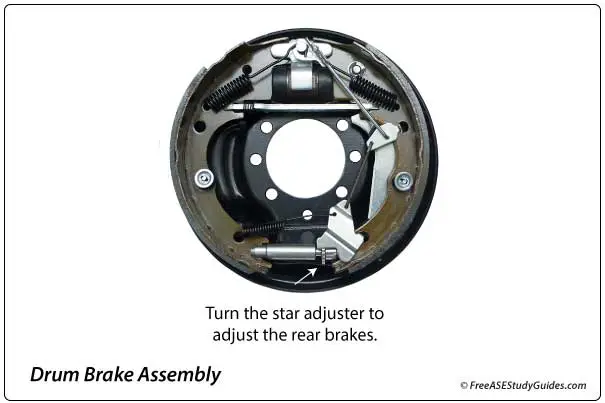
If the brake pedal is over-adjusted or if debris is blocking the vent port, the pressurized fluid cannot return to the reservoir. The blocked port results in residual pressure in the braking system, brake drag, and lock up. Loosening the flare nut at the master cylinder port or the brake units will relieve this excess pressure but will not fix the underlying cause.
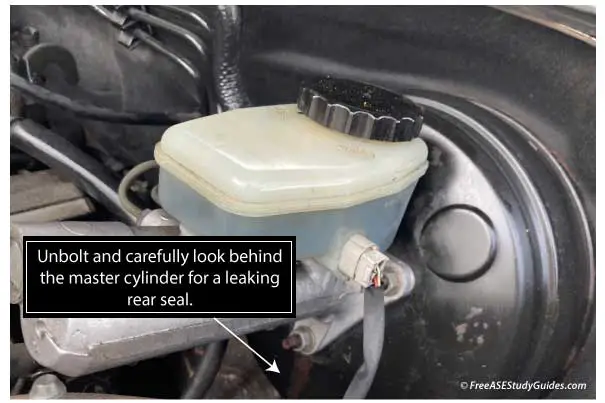
Primary piston cup seals are located on the pedal side of the master cylinder, and the secondary seals are toward the front of the vehicle. An O-ring at the rear of the primary piston prevents fluid from leaking into the brake booster. When brake fluid leaks past this seal or o-ring, it can be seen under the master cylinder on the vacuum booster shell.