Brake Light Circuits
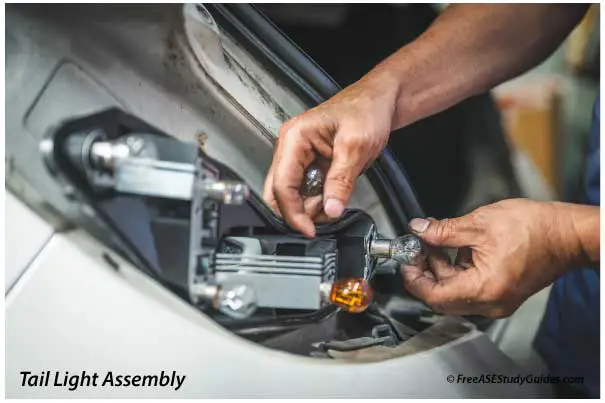
Tail light assemblies include parking, brake, turn, and hazard light circuits. Some vehicles have a bulb dedicated to each tail light function. These are called three-bulb tail light systems. Each side of the vehicle has a bulb dedicated to the turning, brake, and running lights.

Most of today's tail light assemblies use multipurpose dual filament bulbs. These are two bulb systems. Each bulb has a high-intensity filament and a low-intensity filament. The high-intensity filament is part of the hazard, turning, and brake light circuits.
Brake Bulb Check
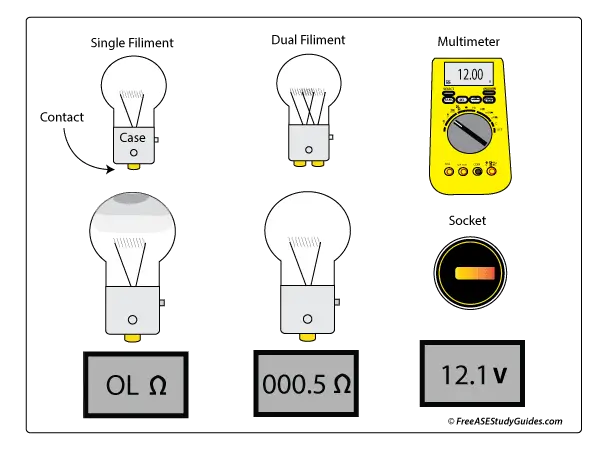
Most of the time, it's apparent the bulb has burned by the discoloring inside the bulb. If not, remove the bulb and test it with a multimeter set to ohms. Place the negative tip on the case of the bulb and the positive tip on its contact. If the meter reads OL or infinity, the bulb is open and needs replacement. If the bulb reads continuity or is close to it, it is good, and the socket and its circuit need testing.