Automatic Transmission Fluid
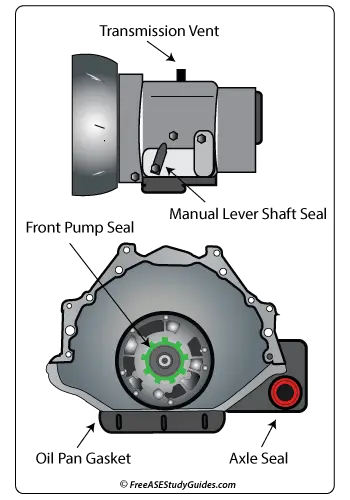
Automatic transmission fluid is a highly refined mineral oil or a newer synthetic blend. Manufacturers add detergents and other compounds to reduce oxidation, foaming, and other general wear concerns. Transmission fluid lasts much longer than engine oil because engine oil suffers from residue created in the engine's combustion chamber. This does not occur in transmissions. The red-colored automatic transmission fluid turns brown from heat and oxidation.
In older models, transmission fluid should be changed every 30,000 miles. With many late-model vehicles, a transmission fluid flush is recommended every 100,000 miles. The fluid's life depends upon several factors:
Type of Fluid: Fluids offer different levels of protection. They contain surfactants, anti-oxidation compounds, detergents, anti-foam additives, anti-wear additives, and friction modifiers to help protect and add life to the transmission.
Debris in the Transmission Pan
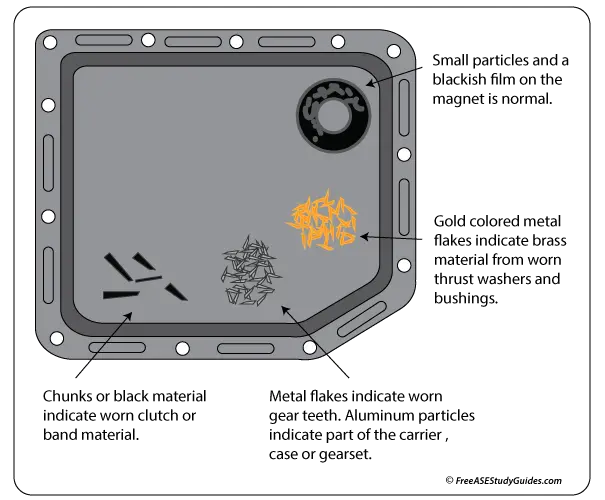
Transmission Service: Older transmissions require fluids that don't last as long as the newer designs. Some vehicles use a screen-type filter to catch the larger debris, leaving smaller particles circulating with the fluid. The good thing about a metal screen filter is that it can be cleaned and reused. The problem is the cloth screen does a better job of cleaning and picking up the smaller particles more efficiently. Ideally, it should be flushed every two years or 24,000 miles.
Pink and Milky Transmission Fluid

Check for water contamination if the transmission fluid appears pink and milky. The transmission cooler is located in the radiator. If there's a leak, transmission fluid and coolant mix. This contamination results in pink milky transmission fluid.
Transmission Fluid Temperature
Transmission fluid's ability to withstand temperature depends on its design. Typically, ATF is designed to operate at around 175° F. It breaks down quickly as it exceeds this temperature. A 20° F increase in temperature decreases the fluid's life by half. Transmission fluid breakdown results from heat generated by the torque converter, debris caused by friction surfaces on the bands and clutch packs, and normal wear.
Transmission Fluid Level Check
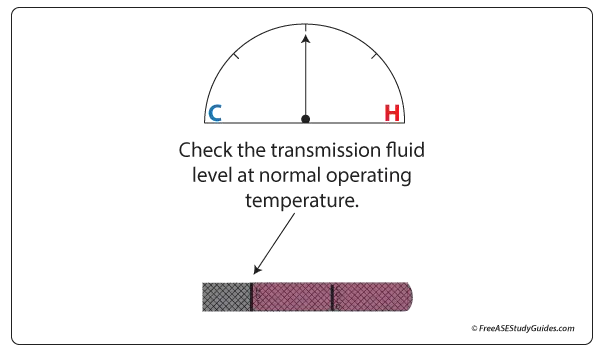
When the fluid level is low, the transmission will slip and cause delayed engagement. When fluid levels are high, the fluid becomes sudsy and aerated. Aerated transmission fluid causes noise and slippage. It's vital to check and keep the transmission fluid at the correct level.