Transmission Oil Pump
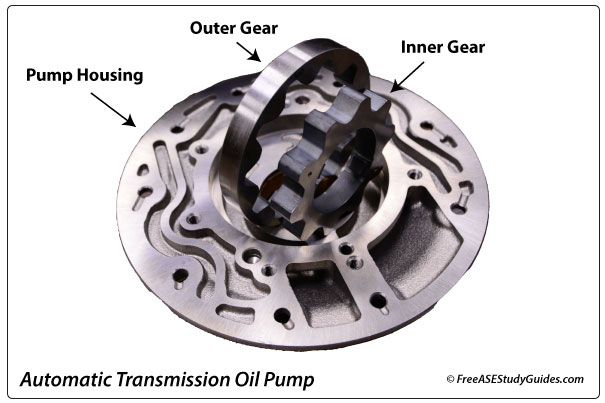
Transmission oil pumps provide the transmission and torque converter fluid pressure. Gear and rotor-type pumps are considered fixed displacement. Most transmissions today have variable displacement pumps that vary or change fluid pressure according to demands.

With a fixed displacement pump, the pressure increases with rotational speed, sometimes providing unneeded pressure. With a variable displacement pump, the pressure is allowed to decrease with lesser demand. It saves energy by reducing output without affecting speed.
Transmission pumps are driven directly from the engine through the torque converter. The torque converter housing is mechanically attached to the engine's crankshaft, causing the pump to operate whenever the engine runs. It's why a worn or faulty pump makes a whining noise in all gears, including park and neutral.
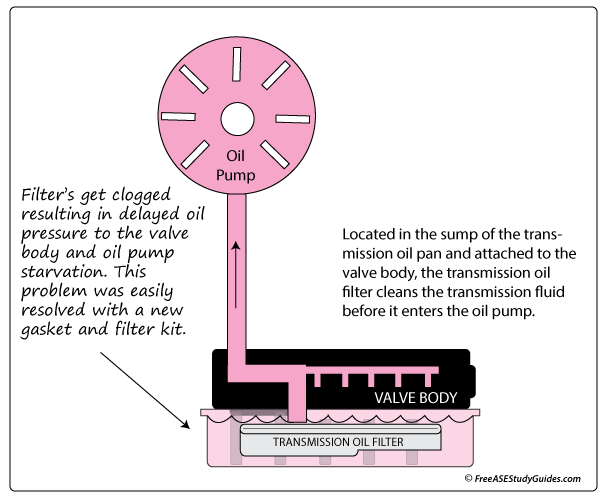
A restricted or clogged transmission filter makes the same whining noise as a faulty transmission pump. It's crucial when diagnosing a transmission pump or a torque converter. Make sure the filter's good before replacing the pump.
Diagnosing a transmission is the same as anything else; it often ends up being a process of elimination. Ensure it's not a problem with the engine before troubleshooting transmission noise or vibration. Begin with the basics, and remember, if something is not moving, it's not making a noise. It's essential when diagnosing the drivetrain and planetary gearsets. In Drive with the wheels held stationary, the entire drivetrain's stationery, eliminating these items as a potential cause of the noise.