Positive Crankcase Ventilation

The PCV system regulates crankcase pressure and ventilates gas fumes into the intake manifold. This system protects the engine oil from premature contamination. It protects the environment from escaping blowby gases by directing them into the intake manifold for combustion.
The PCV system consists of the PCV (Positive Crankcase Ventilation) valve, grommet, tube, and an air supply hose to the crankcase. Check around these fittings for any signs of oil. Everything must be tight. Oil leakage indicates a problem with the system.
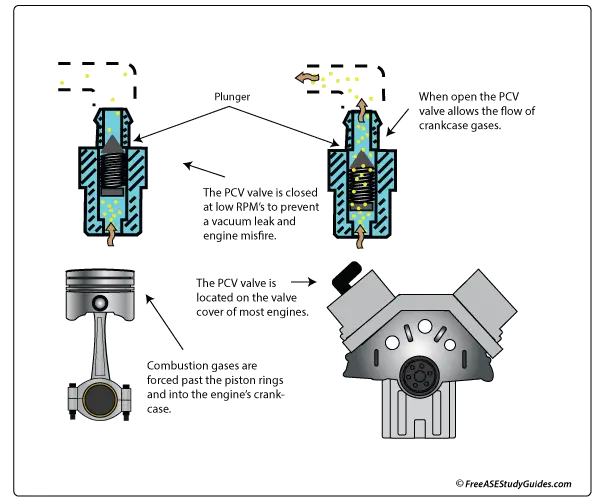
A drop in intake manifold vacuum occurs when the engine is accelerated. When the intake manifold vacuum is low, a light spring holds the PCV valve in its open position. The open valve results in maximum crankcase ventilation. Conversely, when the engine is idle, a high intake manifold vacuum pulls the valve upward, blocking the port to the intake manifold.
PCV Valve Symptoms
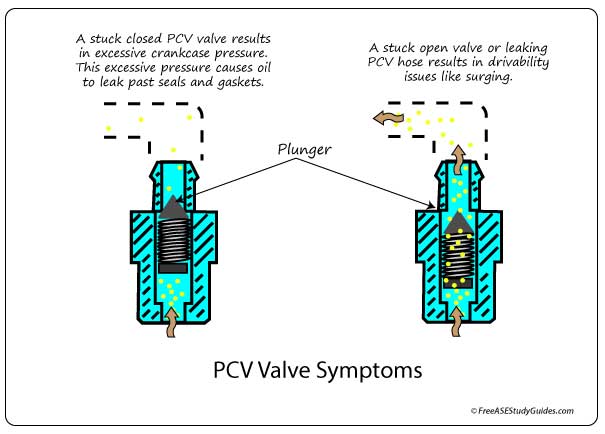
A stuck closed PCV valve results in excessive crankcase pressure. It forces oil past the engine's seals and gaskets. A stuck open PCV valve or leaking hose results in a large vacuum leak, a rough idle, and drivability issues like surging. A closed or tarnished PCV valve can cause engine oil to clog the breather.
PCV Valve Testing

Most PCV valves contain a light spring and should rattle when shaken. If the valve does not rattle, it is clogged and needs replacement. At idle, with the PCV valve removed from the valve cover, there should be an engine vacuum at the PCV valve inlet. Placing a thumb over and pugging the leaking valve should verify the vacuum pressure and plug the leak.