Bump, Memory and Torque Steer

Vehicle Wander : Vehicle wander occurs when a vehicle veers left or right on its own, making it difficult to keep the vehicle centered in its lane. Loose steering linkage, worn gearbox, and inaccurate caster angles result in vehicle wander.
Bump Steer

Bump Steer: Bump steer occurs when a vehicle is traveling down the road in a straight line, hits a bump, and now pulls to one side. It happens because one of the front tie rods is now higher than the other. A worn or loose idler or pitman arm results in this problem in a parallelogram steering system. Worn or damaged rack mounting bushings or loose mounting bolts cause changes in tie rod angles in a rack and pinion system.
Memory Steer
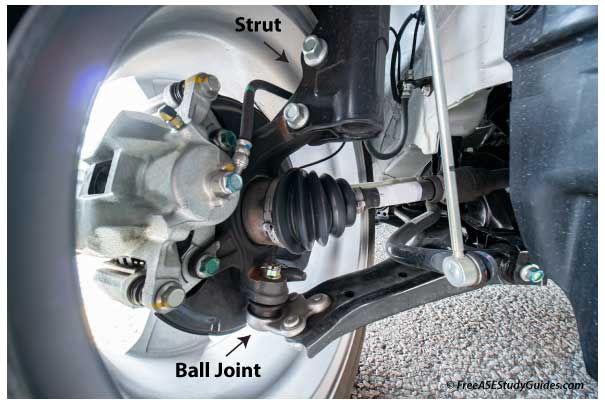
Memory Steer: A vehicle's steering wheel is supposed to return to the center after completing a turn. If the wheel does not return as specified, memory steer, typically caused by binding parts, causes this condition. Inspect front-wheel drive vehicles' upper strut mounts, bearings, and ball joints. A binding gear or universal joint/flexible coupling will result in a poor steering wheel return to the center. Check the adjustment of parallelogram steering systems' gearbox sector and worm gear.
Torque Steer

Torque Steer: Torque steer occurs in FWD vehicles when the vehicle pulls to one side during hard acceleration due to uneven axle shaft lengths. They pull to the side with the shortest axle. Some manufacturers have created vehicles with equal-length shafts to compensate for this phenomenon. Different tread patterns or different size tires also result in torque steer.